
Simple Environmental Modifications and Enrichment Ideas for Your Cat With Osteoarthritis
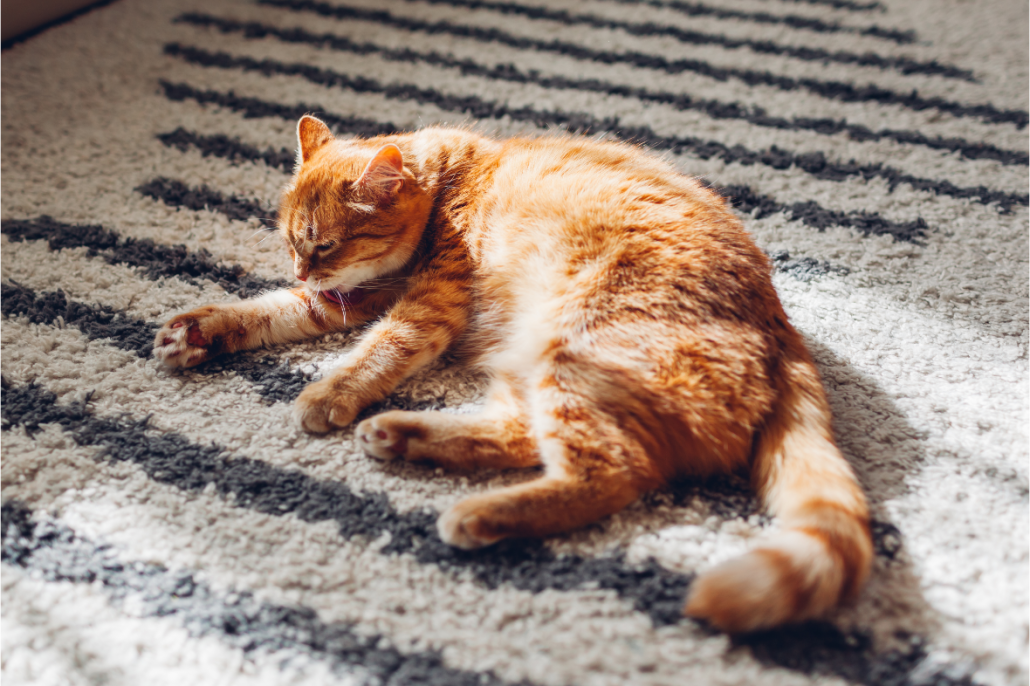
Did you know that approximately 40% of cats show signs of osteoarthritis (OA), and up to 90% of cats over 12-years-old have radiographic evidence of OA in at least one joint? While it is often hard to detect when a kitty is having joint pain, it is easy to make modifications to their environment that can help them maintain a happy life.
Here are some ideas for environmental changes and enrichment to support your cat with OA!
Kicker Toys
Cats are predators, and even with achy joints their instincts remain strong. A kicker toy is designed for a cat to hold onto with its front paws while kicking with its hind legs, mimicking natural behavior while helping to maintain strength and flexibility in their rear limbs.
These soft toys are usually tube-shaped and come in many forms. It can be as simple as a plush animal to durable, commercially made versions with reinforced stitching, crinkling and other sounds, or pockets for catnip. You can experiment with several different types to give your kitty variety! Here are a couple of examples.
Scratching Modifications
While kicker toys are good for a cat’s hind limbs, scratching helps them maintain strength and flexibility in their front limbs while maintaining nail health. For a cat with OA, horizontal scratching posts are easier to use than vertical ones. This can be as easy as hanging wall cardboard box scratchers close to the ground, or attaching a vertical scratcher to a low horizontal surface. Here is an example.
The Famous Cardboard Box
Even geriatric kitties find comfort and security in a box! For a cat with OA that can no longer jump or step over high edges, you can easily modify this free source of enrichment. Simply turn the box on its side or cut a low opening to create an easily accessible den.
Rethinking the Litter Box
Veterinary examinations are fundamental for cats eliminating outside of their litter box. In addition to problems of the urinary or digestive systems, changes in litter box habits may be a sign of discomfort. Cats struggling with OA may find it painful to climb in and out of a traditional high-sided box. Furthermore, in multi-story homes, the journey up or down stairs to reach the box can be a significant hurdle.
To overcome this challenge, you can provide litter boxes with at least one very low lip for easy entry. Also, consider placing a litter box on each level of your home that your cat has access to. Older cats dealing with both OA and potential cognitive decline may benefit from having all their essential resources located in one convenient area. See here for examples of OA-friendly litter boxes.
Rugs!! Paving a Path for Comfort
Slick surfaces can be challenging and intimidating for a cat with mobility issues to walk on, often discouraging them from moving around the house. Yoga mats, runners and area rugs with a low pile can help your feline move around your house easier.
Keeping your older cat’s nails trimmed is also crucial. Overly long nails can inhibit mobility and cause pain and even lead to serious medical problems if they grow into the paw pads.
Easy Access to Essential Resources
If stairs have become an obstacle, ensure your cat has everything they need on the level where they spend most of their time. This includes food and water bowls, beds, litter trays, scratching posts, and toys. Making life easier on a single level reduces the daily physical strain on their joints.
Elevated Lookouts and Cozy Beds
Cats instinctively love to perch up high, whether on a windowsill to watch the world go by or on a cozy spot on the sofa. To help your arthritic cat continue to enjoy their favorite spots, provide pet-friendly ramps or steps. Wide platforms allow even more unstable kitties to relax safely. Adding a warming blanket or a self-heating pet bed to these spots can provide extra comfort for sore joints.
Dining in Comfort
Bending down to eat from a bowl on the floor can put a strain on the neck, shoulders, and back of an arthritic cat. By using raised food and water bowls, you can bring their meal to a more comfortable height, preventing pain and making mealtime a more pleasant experience.
By utilizing these simple methods, you can put your cat more at ease and they can enjoy a greater quality of life, even in their golden years!
References
Slingerland LI, Hazewinkel HA, Meij BP, Picavet P, Voorhout G. Cross-sectional study of the prevalence and clinical features of osteoarthritis in 100 cats. Vet J. 2011 Mar;187(3):304-9. doi: 10.1016/j.tvjl.2009.12.014. Epub 2010 Jan 18. PMID: 20083417.
Enomoto M, Lascelles BDX, Gruen ME. Development of a checklist for the detection of degenerative joint disease-associated pain in cats. J Feline Med Surg. 2020 Dec;22(12):1137-1147. doi: 10.1177/1098612X20907424. Epub 2020 Mar 3. PMID: 32122226; PMCID: PMC7736399.
For Cat Owners | Indoor Pet Initiative
How to Make Your Arthritic Cat More Comfortable | Zoetis Petcare